

Introduction
In an age of constant innovation and evolving project demands, organizations face a dual challenge: ensuring efficient job processing and maintaining accurate cost control. Traditional methods often struggle to keep pace with the dynamic nature of modern projects, leading to inefficiencies in resource allocation and a lack of real-time financial insights.
This is where a robust Job Processing and Costing solution comes into play. Imagine a comprehensive platform that empowers you to track financial investments and manpower allocation for your projects with unparalleled clarity. This solution transcends the limitations of outdated systems, offering a holistic approach to project lifecycle management.
Conflicts of Interest Without Job Processing and Costing Solutions
In the fast-paced world of project management, navigating competing interests and ensuring transparency can be a constant struggle. Without a robust Job Processing and Costing (JPC) solution, organizations are susceptible to several conflicts of interest that can derail project success. Here are some key challenges:
Inaccurate Cost Estimates
Manual processes and siloed data can lead to inaccurate cost estimations at the outset of a project. This lack of transparency sets the stage for potential budget overruns and disputes later on.
Resource Misallocation
Without real-time insights into manpower allocation, assigning the right team members to tasks becomes a guessing game. This can lead to under-utilization of skilled personnel or overworked teams, impacting project quality and timelines.
Hidden Costs
Manual tracking methods often fail to capture all project-related expenses. This lack of visibility can lead to hidden costs that erode profitability and create tension between departments vying for budget constraints.
Unforeseen Delays
Without real-time monitoring of project progress and resource utilization, identifying potential delays becomes difficult. This can lead to missed deadlines, frustrated clients, and potential revenue loss.
Reduced Accountability
Manual processes and scattered data make it difficult to pinpoint responsibility for project delays, cost overruns, or quality issues. This lack of accountability can foster a culture of finger-pointing and hinder collaborative problem-solving. A JPC solution provides a clear audit trail, streamlining accountability and promoting ownership.
Key Features and Offerings
- Project Breakdown Structure: Create projects, phases, and jobs, enabling the division of complex projects into manageable tasks for efficient job allocation and progress tracking.
- Flexible Project Management: Add existing phases and jobs to new projects, fostering a flexible approach to project planning and execution.
- User-Specific Job Allocation: Assign jobs to specific employees or departments directly through the platform, ensuring optimal resource utilization based on skills and expertise.
- Automated Job Progress Tracking: Eliminate manual data entry with an automated system that tracks job progress, calculates units produced, and monitors project phases, providing real-time insights into project status (active, completed, in progress).
- Detailed Reporting: Generate user-wise and job-wise reports with customizable filters for in-depth analysis of job-related man-hours, resource utilization, productivity, and project performance. Leverage this data to make informed decisions regarding resource allocation and project optimization.
-
Job Hours Based Payment Policies: Enable payment calculations based on actual hours worked per job, ensuring fair and accurate compensation.
- Inclusion of Independent Jobs: Manage standalone jobs outside of a project structure, offering greater flexibility for handling one-off tasks.
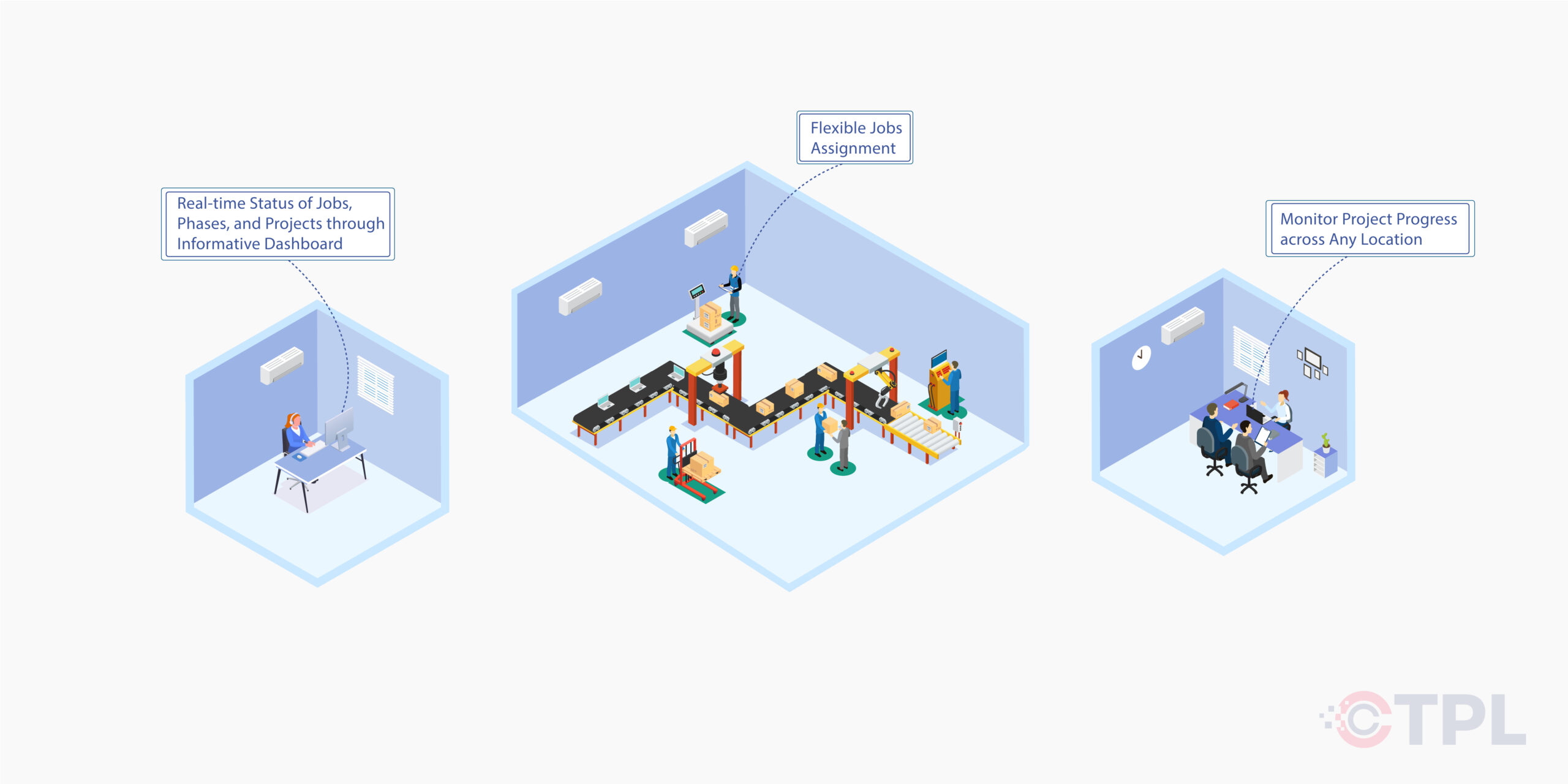
- Job and Project Process Monitoring: Gain real-time visibility into the progress of individual jobs and overall projects. This functionality provides a comprehensive overview of project status, resource allocation, and potential bottlenecks, allowing for proactive intervention and course correction when needed.
Advantages of Job Processing and Costing Solutions
- Enhanced Project Efficiency: Break down complex projects into manageable tasks, automate progress tracking, and gain real-time insights for proactive decision-making.
- Optimized Resource Allocation: Allocate jobs based on user skills and department expertise, track manpower utilization, and ensure optimal resource usage throughout the project lifecycle.
- Improved Cost Control: Eliminate manual data entry errors, track project costs accurately, and leverage detailed reports to identify potential cost savings and optimize pricing strategies.
- Streamlined Communication and Collaboration: Establish a centralized platform for project information, enabling transparent communication and collaborative decision-making across teams.
- Data-Driven Decision Making: Generate user-wise and job-wise reports to gain valuable insights into project performance, resource utilization, and identify areas for improvement. This empowers data-driven decision making for future projects.
- Reduced Risk of Errors: Minimize errors associated with manual data entry and streamline payment processes, ensuring accurate and timely compensation for employees.
Conclusion
By implementing the Matrix Job Processing and Costing Solution, organizations can unlock a multitude of benefits that extend beyond core project management functions. This comprehensive solution empowers a more efficient, data-driven, and collaborative approach to project delivery, ultimately leading to increased profitability and a competitive edge.
